Kenyan SMEs are under more pressure than ever to present themselves clearly online and in procurement workflows. As mobile internet use keeps rising and public procurement moves deeper into digital systems, a weak profile PDF or an outdated corporate presentation can cost a business real opportunities. If you are comparing providers for **company profile design Kenya**, this guide explains what matters in 2026, what buyers and procurement teams expect, and how to choose a profile that actually helps you win work.
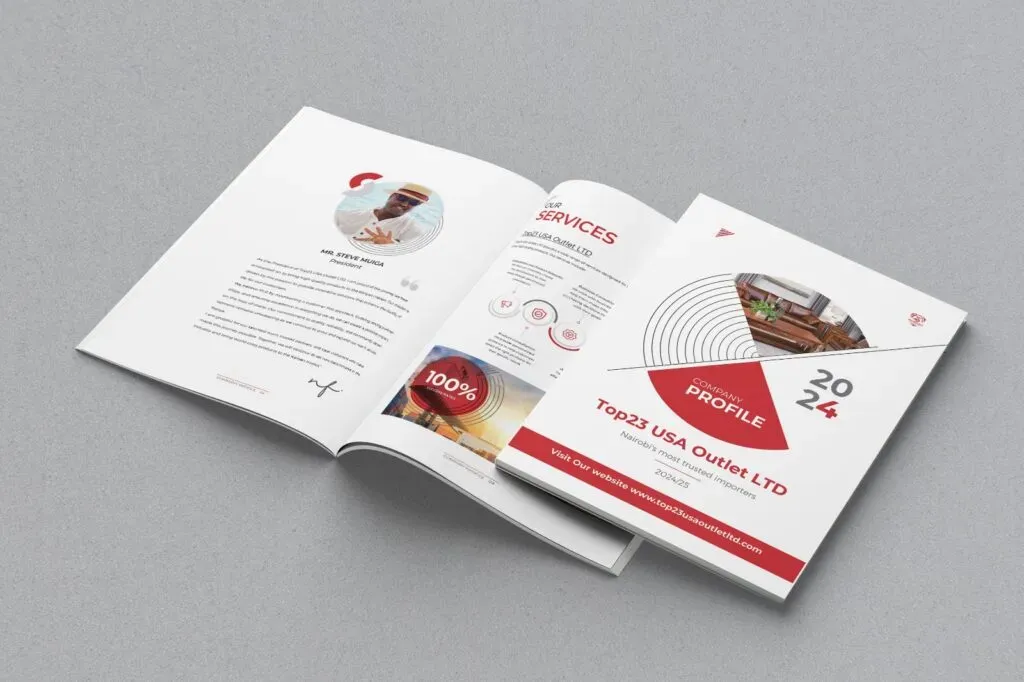
A modern company profile is no longer just a brochure. It is a sales document, a procurement support asset, a trust signal, and often the first detailed explanation of your business that a prospect, partner, lender, or tender committee will see. For many Kenyan businesses, investing in **company profile design Kenya** is now part of the wider digital growth stack alongside a responsive website, social proof, and faster lead handling.
Why company profiles matter more in Kenya in 2026
Kenya?s digital environment keeps expanding. DataReportal?s Digital 2026 Kenya report says the country had 77.5 million cellular mobile connections at the end of 2025, 23.4 million internet users, and 18.4 million social media user identities. The Communications Authority of Kenya also reported in December 2025 that mobile data subscriptions reached 60.2 million by the end of September 2025 and that 78.3 percent of those subscriptions were mobile broadband connections. In practice, that means more prospects are discovering suppliers on phones first, then asking for a profile, proposal, capability statement, or credentials deck before they commit.
At the same time, procurement workflows are becoming more digital. Kenya?s National Treasury announced on April 9, 2025 that the e-Government Procurement system had been launched on April 7, 2025, with suppliers expected to register, submit bids online, track tender statuses, and manage contracts through the platform. That shift raises the bar for documentation. Businesses need cleaner digital files, clearer capability summaries, and a professional presentation of compliance information.
For youth-, women-, and disability-owned enterprises, AGPO continues to matter as well. The AGPO program states that 30 percent of government procurement opportunities are reserved for qualifying businesses, and suppliers register online after meeting the required business and compliance steps. In that environment, a polished profile is not a luxury. It helps convert eligibility into credibility.
What a good company profile should include
A strong company profile should help a buyer understand who you are, what you do, why you are credible, and how to contact you fast. The best profiles are structured for both busy decision-makers and procurement reviewers.
Your company profile should usually include:
A clear business overview with your legal name, industry, location, and contact details.
A concise brand story covering your background, mission, vision, and values.
A services section that explains what you deliver in language real buyers use.
A capability summary showing team strengths, sectors served, tools, systems, or delivery capacity.
Proof elements such as client categories, selected projects, testimonials, certifications, or process diagrams.
A tender-friendly section with registration details, compliance information, and operational coverage where relevant.
A final call to action with direct contact channels and next steps.
If your current document is overloaded with dense text, clip-art visuals, inconsistent fonts, or random screenshots, it will slow the reader down. Good **company profile design Kenya** work makes the content easier to trust and easier to skim.
What Kenyan buyers and tender evaluators look for
In Kenya, many businesses use their profile in more than one context. The same document may be sent to a private client, uploaded during supplier onboarding, attached to a proposal, shared over WhatsApp, or included in a tender response pack. That means the profile must be useful in both sales and compliance contexts.
Buyers usually look for clarity first. They want to know whether you are relevant, responsive, and capable. Tender evaluators or procurement teams often look for structure, consistency, and document readiness. That includes whether your profile explains your services clearly, uses professional layouts, and reflects a business that is organized enough to deliver.
The most common issues we see are:
Generic messaging that could describe any company.
Missing differentiation, such as sectors served or specific strengths.
Weak visual hierarchy that makes the PDF hard to scan on a phone.
No proof of work, no service flow, and no outcome framing.
Outdated branding that conflicts with the business website or social channels.
No clear internal owner for updates, so the document goes stale.
This is why many SMEs pair profile work with stronger digital foundations such aswebsite development services, a tighter sales story, and a more structured enquiry flow.
How to choose the right company profile design service in Kenya
Not every designer is the right fit for this job. A company profile is partly a design task, but it is also an information architecture and positioning task. You need a provider who can organize messy business information into a document that feels credible and easy to act on.
When comparing agencies or freelancers, ask these questions:
Do they understand tender-ready and sales-ready profile structures?
Can they help refine the copy, not only decorate raw text?
Will the final file work well as a PDF on mobile and desktop?
Can they align the profile with your logo, color system, and website tone?
Will they include charts, icons, service diagrams, or page layouts that improve clarity?
Can they produce print-ready and editable source files where needed?
A serious provider should also ask you good questions about audience, sectors, decision-makers, and business goals. If they jump straight to color choices before understanding how the document will be used, that is a weak sign.
If you need a starting point, see Mocky Digital?scompany profile design serviceandportfolio examplesto compare structure, tone, and presentation quality before you commit.
How much company profile design costs in Kenya
Pricing varies based on scope, not just page count. A basic profile for a small business may focus on layout polish and limited content cleanup. A higher-end profile may involve copy refinement, service positioning, custom icons, data visualization, and tender-oriented sections.
In general, pricing tends to move based on:
Number of pages and level of content development.
Whether the provider writes, edits, or only designs.
The amount of brand alignment work required.
Use of charts, diagrams, tables, and infographics.
Turnaround speed and number of revision rounds.
Whether you need print production support as well.
The cheapest option is rarely the cheapest in practice if the final file still needs rewriting or cannot support real sales conversations. A better benchmark is whether the finished profile helps you present your services more clearly, support proposals faster, and look credible in front of serious buyers.
How to get better results from your company profile project
Before you hire a designer, gather the inputs that make the project easier and faster. Prepare your logo files, business registration details, service list, team information, project examples, certifications, photos, and any testimonials you can verify. Even if some of that material is rough, it gives the designer something concrete to structure.
You should also be clear about where the document will be used. A profile aimed at corporate partnerships may need a more strategic tone. One intended for AGPO or wider procurement activity may need cleaner compliance pages and faster scanning. One intended for WhatsApp lead follow-up may need shorter sections and stronger contact cues.
The strongest profiles usually connect with the rest of your digital presence. If your business also needs a cleaner website, stronger visuals, or a sharper conversion journey, book aproject consultationso the profile, website, and sales assets do not pull in different directions.
Frequently Asked Questions
How many pages should a company profile have?
Most SMEs do well with a focused 8 to 16 page profile. The right length depends on your services, proof assets, and buyer expectations. More pages do not automatically make the document stronger.
Is company profile design Kenya useful for small businesses?
Yes. For many SMEs, **company profile design Kenya** is one of the fastest ways to improve credibility when responding to enquiries, sending proposals, or pursuing supplier and tender opportunities.
Do I need both a website and a company profile?
Usually yes. Your website helps people discover you, while the profile helps you present detailed credentials in a portable format that can be emailed, downloaded, shared on WhatsApp, or attached to proposals.
Can one profile work for tenders and private-sector sales?
Sometimes, but often it is smarter to create one core profile and adapt a few pages depending on the audience. Procurement evaluators and direct buyers do not always need the same emphasis.
What file format should I request?
Ask for a clean PDF at minimum. Depending on your workflow, editable source files and print-ready exports may also be useful.
Final takeaway
In 2026, the businesses that win more opportunities in Kenya are usually the ones that present themselves clearly across digital touchpoints. A strong profile helps you look organized, capable, and easier to trust. As procurement systems, mobile internet use, and digital supplier discovery keep growing, investing in **company profile design Kenya** is a practical sales and credibility decision, not just a branding exercise.
If your current profile feels outdated, inconsistent, or too generic, it is time to rebuild it into a document that supports real business outcomes.